






1. Types of Korean Dried Persimmon Begin with Time and Drying
When people search for types of Korean dried persimmon, they often expect a single product. In reality, Korean persimmons transform into several distinct forms depending on drying time, moisture level, and handling method. These variations are not marketing categories but results of controlled natural processes. Understanding the types of Korean dried persimmon begins with recognizing how time and airflow shape texture, sweetness, and usage.
In Korea, persimmons historically served as winter food. Farmers adapted drying methods to suit climate and storage needs, creating different styles over generations. Today, these types still coexist: fully dried persimmons (geonsi), semi-dried persimmons (ban-geonsi), and sliced persimmon snacks (gam-mallaengi). Each type reflects a different balance between preservation and eating experience, not a hierarchy of quality.
Nurifarmer follows this traditional classification carefully. The brand does not force one format to fit all customers. Instead, it respects how each type of Korean dried persimmon fits specific moments, from ceremonial use to casual daily snacks.


2. Geonsi: The Fully Korean Dried Persimmon
Geonsi represents the most traditional and long-lasting type of Korean dried persimmon. Farmers dry these persimmons slowly until most moisture disappears. The surface develops a natural white coating formed by crystallized sugars, not additives. This coating protects the fruit and signals proper drying.
Geonsi offers firm texture, concentrated sweetness, and long shelf life. Koreans traditionally use it for holidays, ancestral rites, and tea pairings. Because geonsi continues to mature during storage, proper handling becomes essential. Learning about types of Korean dried persimmons often starts with geonsi because it defines the classic standard.
Nurifarmer produces geonsi through monitored airflow and seasonal temperature control rather than artificial dehydration. This approach ensures stable sugar development and prevents bitterness. Customers unfamiliar with this type of Korean dried persimmon often mistake firmness for dryness, but geonsi reveals its richness slowly with each bite.


3. Ban-Geonsi and Gam-Mallaengi: Texture-Focused Varieties
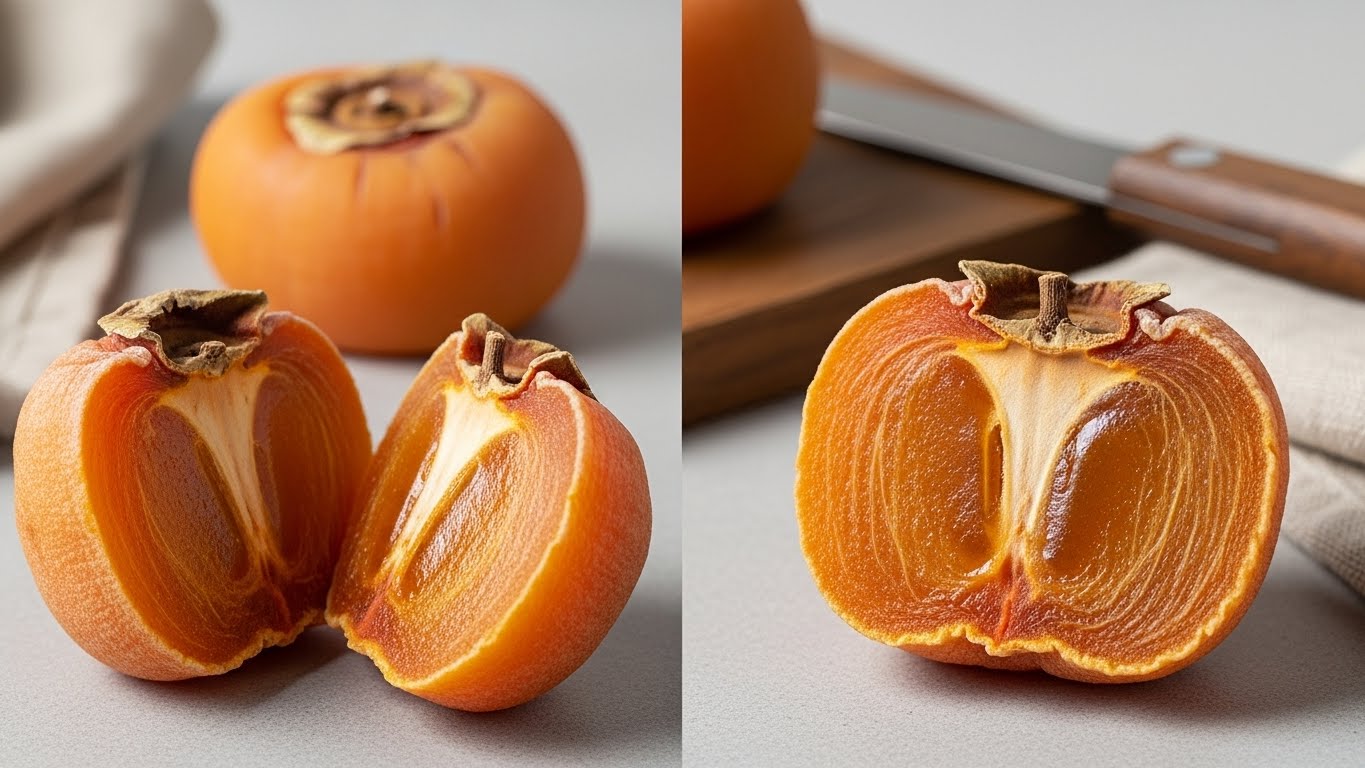
Ban-geonsi, or semi-dried persimmon, retains more moisture than geonsi. This type of Korean dried persimmon delivers a soft, jelly-like interior with a fresh fruit aroma. Koreans often eat ban-geonsi as a dessert or pair it with nuts and dairy. Its shorter drying period creates a product that feels closer to fresh fruit while still offering natural sweetness.
Gam-mallaengi represents another modern adaptation. Producers slice persimmons thinly and dry them evenly, creating chewy, snack-sized pieces. This type of Korean dried persimmon appeals to global consumers because it resembles familiar dried fruit snacks. It works well for travel, portion control, and casual consumption.
Nurifarmer treats ban-geonsi and gam-mallaengi as complementary, not replacements. Each type of Korean dried persimmon serves a different lifestyle, whether slow enjoyment at home or quick energy on the go. This diversity explains why Korean persimmon culture continues to evolve without losing its roots.


4. Choosing the Right Type of Korean Dried Persimmon
Understanding types of Korean dried persimmons helps consumers choose intentionally. Geonsi suits long-term storage and traditional occasions. Ban-geonsi fits immediate enjoyment and soft textures. Gam-mallaengi offers convenience and portability. None replaces the other; each reflects a specific moment and purpose.
Nurifarmer designs its product lines around this philosophy. Rather than standardizing persimmons into a single form, the brand respects natural variation. That approach aligns with how Korean families historically treated persimmons—not as mass products but as seasonal foods shaped by care.
When consumers learn about types of Korean dried persimmons, they gain more than product knowledge. They gain cultural context. This understanding transforms dried persimmons from unfamiliar fruit into meaningful food, capable of connecting tradition, health, and modern life.
Leave a Reply