






1. Persimmons, the Seasonal Starting Point of Korean Autumn and Winter

In Korea, persimmons are more than just a fruit. They represent the transition from autumn to winter and mark the beginning of a long tradition of seasonal food preservation. Within Korean food culture, persimmons symbolize harvest time and preparation for the colder months ahead. As autumn ends, fresh persimmons begin to appear in markets and households, signaling that winter foods are soon to follow.
Korean persimmons are generally categorized into several types, including sweet persimmons, fully ripened soft persimmons, and astringent persimmons. Each type serves a different purpose in Korean cuisine. Some are eaten fresh, while others are selected specifically for processing. From the moment of harvest, farmers already consider whether a persimmon will become dried persimmon later in the season. This early selection process shows how deeply rooted dried persimmons are in Korean autumn and winter food traditions.


2. Soft Persimmons and Semi-Dried Persimmons: Korea’s Sense of Natural Ripening
Unlike many fruit traditions in the West, Korean persimmons change their role as they ripen. In Korean food culture, the stage of ripeness completely transforms how persimmons are enjoyed. Fully ripened soft persimmons are often eaten with a spoon, similar to a dessert, valued for their jelly-like texture and deep natural sweetness.
Semi-dried persimmons represent a middle stage between fresh fruit and fully dried persimmons. They retain about half of their moisture, creating a chewy texture that balances freshness and concentration. In Korea, semi-dried persimmons are commonly enjoyed as winter snacks, served with tea, or given as seasonal gifts. This gradual ripening process reflects Korea’s traditional appreciation for time, patience, and texture in food.


3. Gotgam, the Dried Persimmon That Became Cultural Heritage
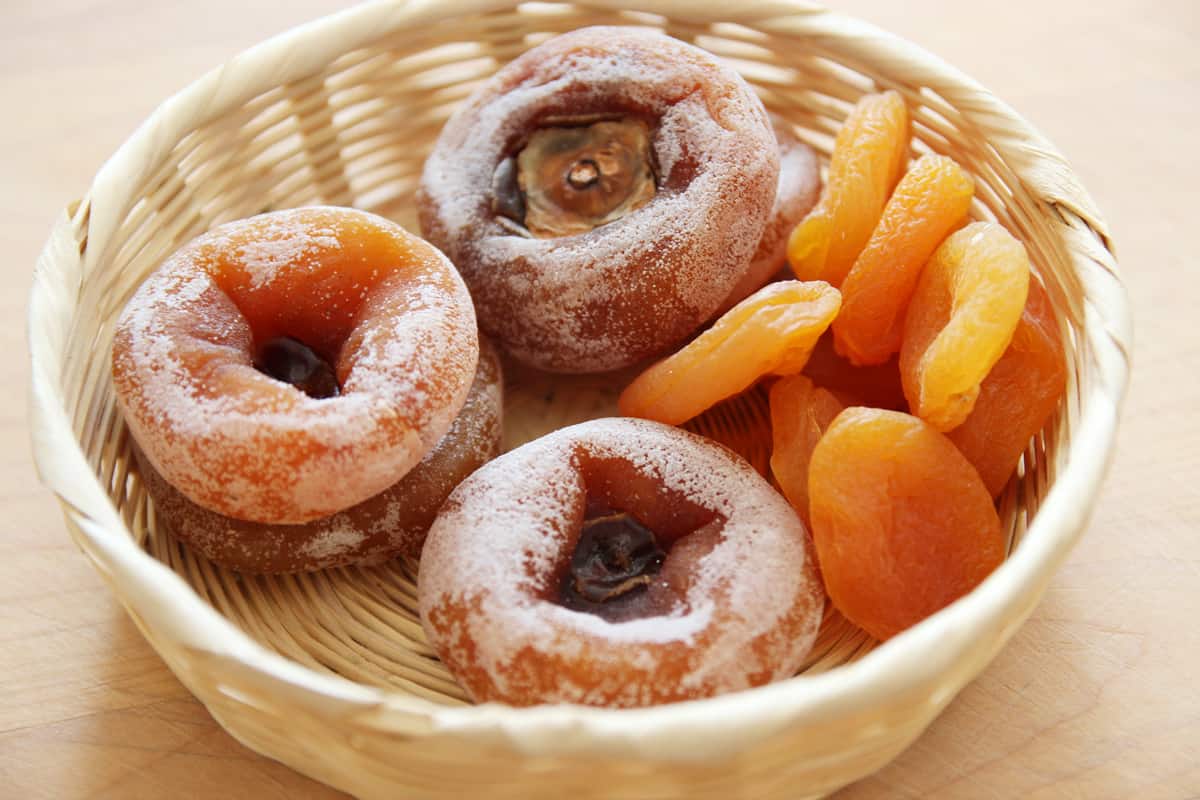
Korean dried persimmons, known as gotgam, represent the peak of persimmon culture in Korea. Originally created as a way to preserve fruit through the winter, gotgam eventually became a food with cultural and ceremonial meaning. They appear during holidays, ancestral rites, and traditional gift exchanges, especially in winter.
One of the most distinctive features of Korean dried persimmons is the white powder that forms on the surface. This white coating is not sugar added or mold, but natural sugar crystals that rise to the surface as moisture slowly evaporates. Traditional air-drying methods, which rely on cold winter air and time rather than artificial heat, allow this process to happen naturally. The result is a dried persimmon with depth, sweetness, and a texture shaped by nature rather than machinery.


4. Modern Uses of Persimmons: From Tradition to Creative Desserts
Today, Korean persimmons continue to evolve beyond traditional forms. While the methods remain rooted in history, modern interpretations introduce new ways to enjoy this fruit. Dried persimmons are now paired with ingredients like cream cheese, nuts, and honey, or shaped into roll-style desserts that highlight both visual beauty and balanced flavor.
These modern persimmon desserts are especially popular as holiday and New Year gifts, including for international audiences. They offer a way to experience Korean tradition in a form that feels familiar yet unique. By preserving traditional techniques while adapting to global tastes, Korean persimmons remain a living food culture—one that connects the past to present-day tables around the world.
Leave a Reply