





1. The scene of preparing dried persimmons, which begins in early winter
The process of making dried persimmons is far more delicate than one might imagine, beginning with labor-intensive tasks requiring significant manual handling. In the workspace pictured, freshly peeled persimmons lie neatly arranged, while skilled hands thread each one onto strings, preparing them for the next stage. When peeling persimmons, maintaining a consistent thickness is essential, and it requires know-how to hold the stem end securely to prevent it from becoming loose. This process directly affects the shape and uniformity of drying, making the care and concentration at this initial stage the most critical. Nuri Farmer’s persimmon preparation is based on experience accumulated over many years of farming, and the quality of this preparation itself is key to the taste of the dried persimmons.


2. The texture of persimmons densely hung in the drying shed
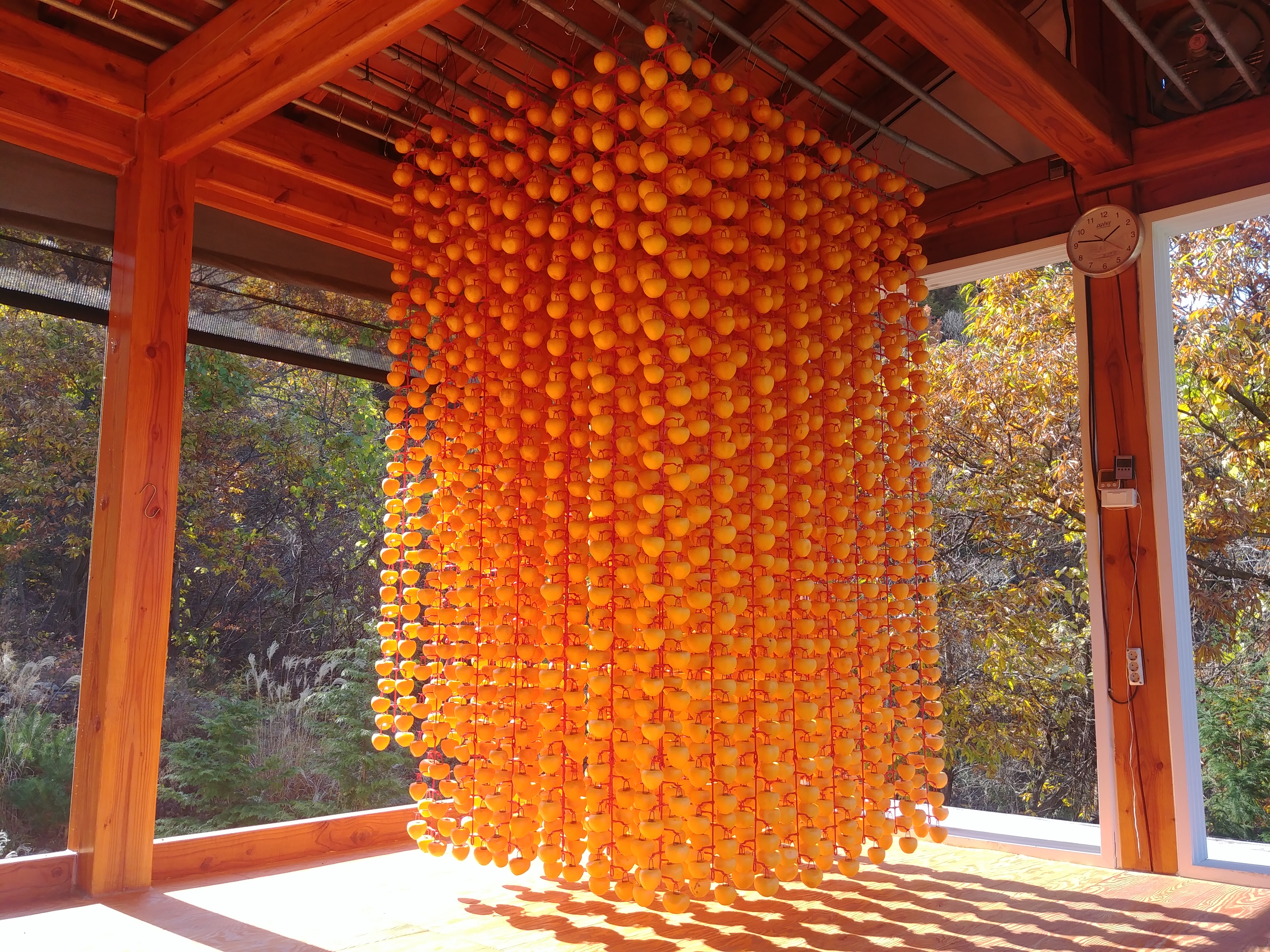
Once the persimmons are prepared, they are immediately moved to the drying shed. As seen in the photo, thousands of persimmons hang in orderly rows, basking in the early winter sunlight. Natural light streaming through the windows touches the persimmons’ surfaces, giving them a bright orange hue. The scene in the drying shed at this time resembles a work of art. Drying is not merely a process of dehydration; it is a technique that gradually removes moisture from the persimmons while concentrating their sweetness by carefully controlling temperature, humidity, and airflow. Nuri Farmer skillfully blends traditional open-air drying methods with modern management systems, ensuring the persimmons dry naturally while maintaining strict hygiene standards.


3. The daily life of a farmhouse, capturing both harvest and natural scenery
While the drying process continues, another harvest unfolds outside. Sunlight filters through the persimmon trees, and photographs capturing the farmer’s work convey the meticulous process of picking each fruit with care. The timing of the harvest is paramount, as the sugar content and texture of persimmons vary depending on temperature differences and wind direction. Nuri Farmer’s Farm, nestled in the foothills, boasts excellent airflow and significant daily temperature variations, creating an environment perfectly optimized for drying persimmons. As seen in the distant landscape photos, the very land where the persimmons grow is situated within abundant nature, allowing the energy of the natural world to permeate each dried persimmon.

4. The perfection of dried persimmons crafted by time
As drying progresses to a certain stage, the persimmons gradually soften, and their insides become concentrated like jelly. The cross-section of the dried persimmon in the final photo clearly shows this concentrated sweetness and viscosity. The exterior develops a soft, powdery white coating like sugar dust, while the interior deepens to an orange hue and acquires a chewy texture. This concentrated result is precisely the traditional Korean snack people love: dried persimmons. Nuri Nongbu farmers personally oversee the entire process—from cultivation and harvesting to preparation and drying—at a single farm. This ensures consistent flavor and minimizes quality variation from year to year. Each dried persimmon, perfected through time and nature’s flow, is not merely a dried fruit but the culmination of accumulated dedication and skill.
Leave a Reply