






1. The Start of Natural Drying for Persimmons
At drying facilities nestled in the foothills of Jirisan Mountain, the drying process begins by hanging each peeled persimmon individually to be exposed to natural breezes. The structure allows air to circulate freely, naturally regulating temperature and humidity. Without applying artificial heat, the persimmons’ inherent sweetness slowly concentrates. Though labor-intensive, persimmons dried this way develop deep color and aroma, allowing you to fully appreciate the flavor crafted by time.
Persimmons grown in fields with ample sunlight are firm and have a stable moisture content, making them ideal for dried persimmons. Persimmons that receive sufficient sunlight from summer through autumn maintain their shape during drying and develop uniform sweetness. The harvest timing is determined by personally inspecting the persimmons’ condition; getting this timing right is crucial for the quality of the dried persimmons.
Harvested persimmons are immediately processed and moved to the drying shed, where they are hung at regular intervals on drying racks to receive natural airflow over an extended period. Initially, moisture evaporates rapidly, but over time, the interior slowly concentrates, developing a chewy texture. The dried persimmons completed through this process represent nature’s bounty, awaited throughout the year, and are the result of dedication and time.


2. The process of persimmons ripening before becoming dried persimmons
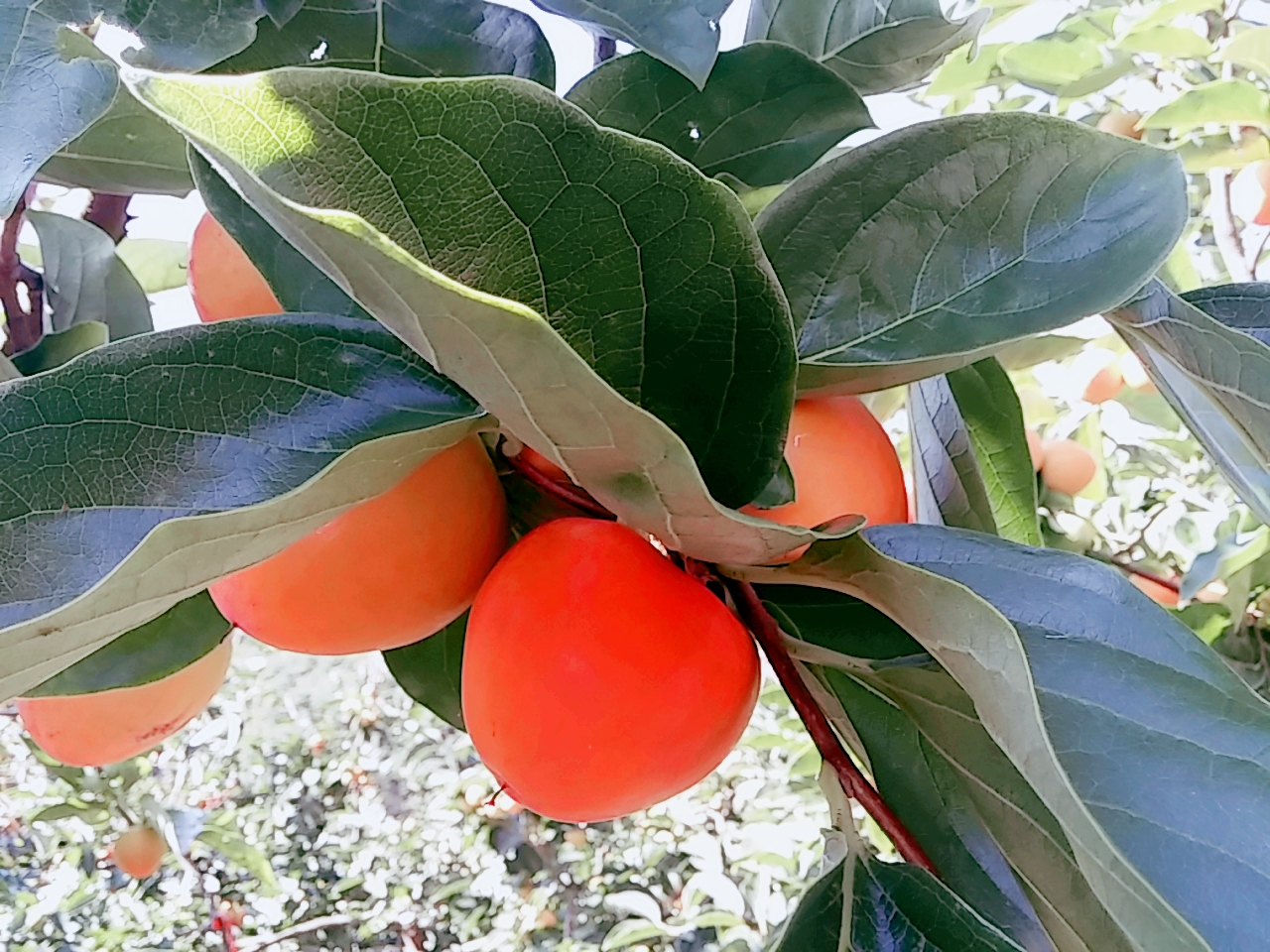
Under clear blue skies, persimmon trees soak up the sunlight, steadily nurturing the year’s harvest. During this period between summer and early autumn, both leaves and fruit grow robustly, developing the firm structure essential for dried persimmons. This natural balance is crucial, ensuring the fruit retains its shape even during the subsequent drying process.
The persimmons hanging at the tips of the branches receive ample sunlight, gradually increasing in sweetness. As the moisture within the flesh slowly stabilizes, they develop their characteristic firmness. For making dried persimmons, the ‘pace of this ripening process’ is crucial, and accurately reading this pace is part of the farmer’s skill. The optimal state is harvesting the persimmons while they maintain the right firmness, before they become too soft.
Seeing the persimmons turning red between the leaves signals that harvest time is approaching. Especially in environments like Nuri Farmer’s persimmon orchard, where the wind blows freely and moisture doesn’t linger, the color and aroma become even more distinct. These healthily grown persimmons are then moved to the drying shed, where they transform into dried persimmons over a long period, exposed to the natural breeze.


3. The human touch at the heart of the process transforming persimmons into dried persimmons
When harvest season arrives, farmers personally inspect each persimmon, selecting the most opportune moment to pick them. As evident in the farmer’s expression in the photo, harvesting persimmons nurtured with care throughout the year transcends mere labor—it is the moment of confirming the harvest’s success. The process of selecting only the finest persimmons by touch and color inspection determines the quality of the dried persimmons.
The selected persimmons are swiftly moved to the drying facility for peeling. This process, where the flesh of the dried persimmon is exposed, requires a delicate touch and relies heavily on the skilled farmer’s intuition. The skin must be peeled evenly to ensure uniform shape during drying and to preserve the chewy texture. Though labor-intensive, it is a crucial step that cannot be rushed.
The peeled persimmons are hung at regular intervals to dry naturally over time, exposed to the breeze. In spaces like the drying shed pictured, where light and shadow interplay, the persimmons slowly deepen in color and concentrate their sweetness. This natural drying method, which avoids artificial heat, takes considerable time but yields a uniquely soft and profound flavor. Only after this meticulous process is the farmer’s dried persimmon finally complete.


4. The Perfection of Nurinongbu’s Dried Persimmons, Crafted by Tradition and Modernity
Nurinongbu’s dried persimmons are slowly perfected in a hanok-style drying shed, adhering to the principle of natural drying. The space in the first photo is designed for optimal airflow, ensuring even drying and creating deep sweetness through significant day-night temperature variations. This drying shed, where sunlight filters in at an angle, embodies the core of the traditional method Nuri Nongbu has upheld, capturing the time and dedication required for nature to perfect the dried persimmons.
In contrast, the second photo shows the modern processing facility, recently operationalized to enhance quality control and hygiene standards. Spaces essential for post-harvest storage, sorting, washing, and packaging are systematically arranged, with an impressive layout designed for efficient worker movement. This is where the natural drying method and modern management system harmoniously converge to produce consistent quality.
Nuri Nongbu harmoniously operates both spaces to maintain the deep flavor imparted by traditional drying methods while meeting modern hygiene and quality control standards. The taste crafted by nature and the quality ensured by human responsibility achieve a balance, with every process meticulously managed so that those receiving the dried persimmons can enjoy them with confidence.
Leave a Reply